Gail
Catlin
ABOUT THE ARTIST
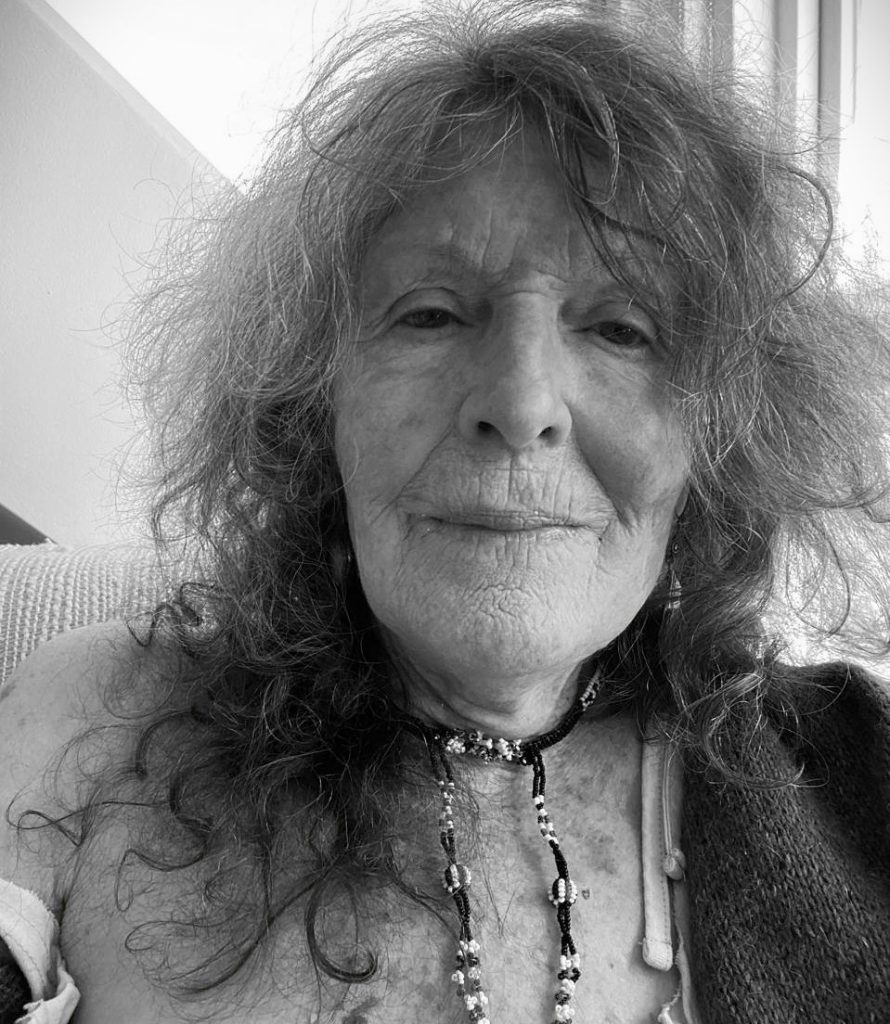
Born in March 1948, Gail Catlin is a South African artist whose pioneering use of liquid crystal has established her as a unique figure in contemporary art.
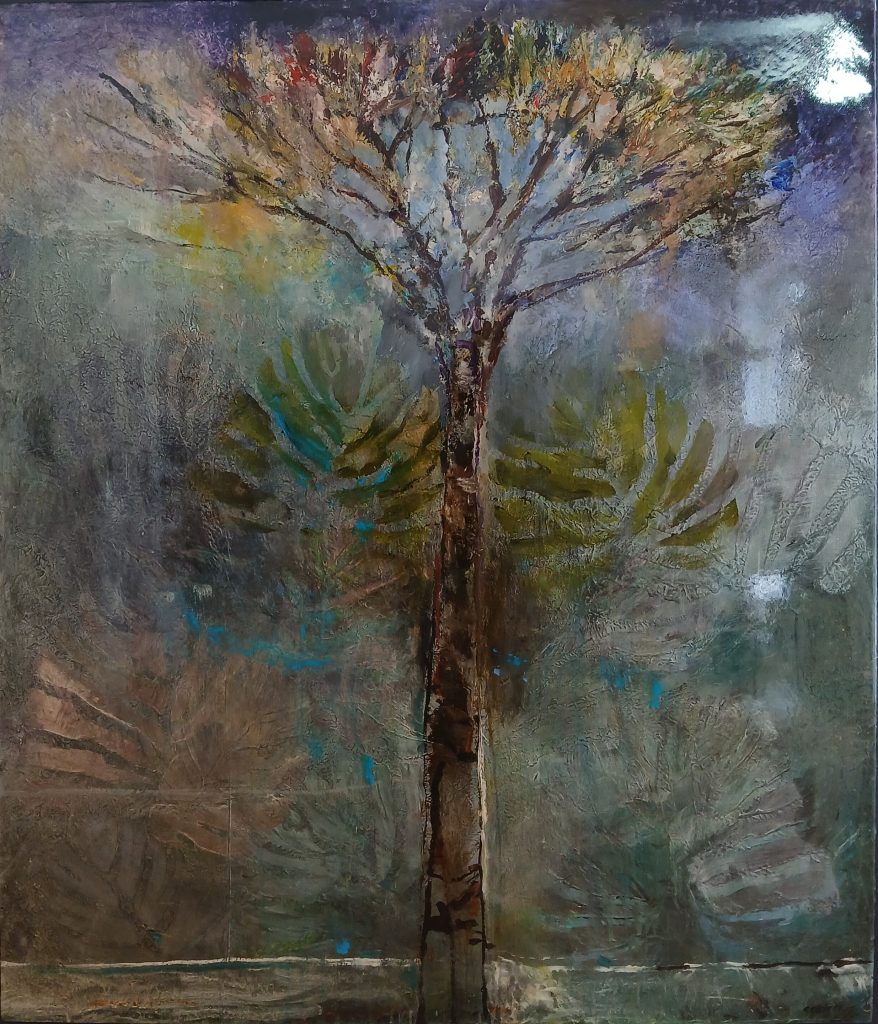
Catlin initially worked in bronze before developing an enduring fascination with light, colour and iridescence. While living in Arniston, she became captivated by the nacreous surfaces of seashells and mother-of-pearl. Traditional painting media could not reproduce the subtle, constantly shifting colours she observed in nature, and she became determined to find a new way of painting with light.
Her search led her to the Royal College of Art in London, where she was accepted for a Master’s degree in 1983. During her studies, she visited Imperial College of Science, Technology and Medicine, where she investigated the science behind the colour spectrum of light. Dissatisfied with conventional explanations, she was introduced to Dr Cyril Hilsum, a leading authority on liquid crystals at General Electric. Their collaboration marked the beginning of Catlin’s pioneering exploration of liquid crystal as an artistic medium.
Through years of experimentation in England and South Africa, Catlin gradually learned to work with the extraordinarily responsive material. Unlike conventional paint, liquid crystal changes its appearance according to light, temperature, viewing angle and its interaction with surrounding crystals. Catlin developed techniques that allowed her to anticipate and manipulate these responses, creating works whose colours and surfaces appear to shift as the viewer moves around them.
Initially, the medium produced predominantly dark, nocturnal tones. Catlin sought a lighter palette that could capture the brilliance of the African landscape. A breakthrough came when she experimented with textured white paper. The angled surface caused the crystals to reflect light in different directions, producing greater shimmer and colour contrast, while the white ground opened up an entirely new spectrum of lighter, softer colours.
The resulting works occupy a fascinating space between art and science. Catlin has worked closely with scientists and technologists specialising in liquid crystals and has been described as one of the earliest artists to explore the possibilities of nanotechnology within art. Her paintings are not fixed images in the conventional sense: their colour and luminosity continually transform in response to their environment and the viewer.
As Lin Sampson once observed, when Catlin spoke about her work, “her eyes changed blues”—an apt description of an artist whose career has been devoted to understanding and capturing the elusive colours of nature.
Catlin’s work has been exhibited extensively in South Africa and internationally, and she has received awards in major national and international competitions. Her distinctive body of work has brought her closer than perhaps any other artist to capturing the extraordinary iridescence of pearl, seashells and the African landscape.