
Currently on show
ANDRÉ FRANÇOIS VAN VUUREN:
PORTRAIT OF THE SOUL
Online Exclusive
July 9 – August 6, 2026
Axis Art Gallery is pleased to present Portrait of the Soul, an online exclusive exhibition of expressionistic portraits and figure studies by acclaimed South African artist André François van Vuuren.
For more than five decades, Van Vuuren has explored portraiture as a means of revealing the invisible. His paintings are not concerned with capturing likenesses or recording individual identities. Rather, they seek to express the psychological, emotional and spiritual presence that exists beneath outward appearance. Each face becomes a vessel through which memory, experience and emotion find form.
The exhibition title, Portrait of the Soul, takes its inspiration from a newspaper review published in 1989, in which critic René Sigel described Van Vuuren’s work as “a portrait of the soul.” Nearly four decades later, the phrase remains an apt description of an artistic vision that has remained remarkably consistent while continually evolving.
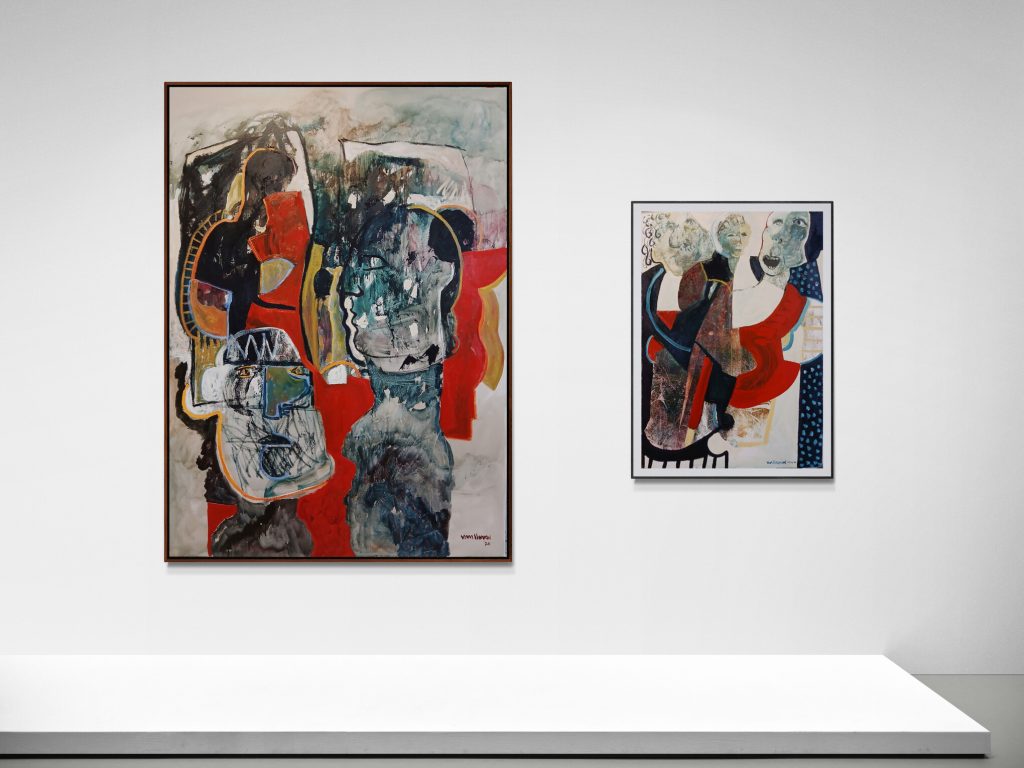
Working intuitively, Van Vuuren begins each painting with drawing. Line provides the underlying structure—the “road map” from which forms emerge, dissolve and reconfigure through successive layers of paint. Portraits become increasingly abstract without losing their emotional immediacy. Rather than depicting individuals, they evoke psychological states, inviting viewers to engage with the works through feeling rather than recognition.
Critics have long recognised the expressive power of Van Vuuren’s work. Writing in The Star, René Sigel praised the artist’s “exceptional technical interpretation of line, colour and form” and observed that his paintings possessed “an extensive and honest emotional premise.” Today, that expressive language has become even more distilled. Dynamic networks of line, layered colour and gestural brushwork allow the works to carry profound emotional weight with remarkable economy.
Although rooted in portraiture, the works in Portrait of the Soul explore broader themes of memory, displacement, conflict, addiction, environmental degradation and the complexities of human relationships. These concerns are never illustrated literally. Instead, they exist as emotional undercurrents, allowing each viewer to find their own point of connection.
Presented exclusively online on Artsy.net, this exhibition celebrates one of South Africa’s most accomplished expressionist painters and reaffirms portraiture as a powerful means of exploring our shared humanity.
DESOLATE DREAMSCAPE
37 Parliament Street, Cape Town, South Africa
May 8 – July 7 2026
Desolate Dreamscape brings together a compelling body of contemporary painting and sculpture that explores the fragile boundary between reality and imagination. Through vast deserted landscapes, fragmented human forms, abandoned industrial remnants, and dreamlike atmospheres, the exhibition reflects on themes of memory, environmental fragility, identity, and humanity’s place within an increasingly uncertain world.
Featuring works by Tertius van Dyk, André François van Vuuren, Jimmy Law, Herman van Nazareth and Mark Hilltout, the exhibition unfolds through psychologically charged environments where time appears suspended and narrative dissolves into silence. Monumental shipwrecks stranded within barren terrains, emptied river systems, and weathered sculptural forms evoke both ecological anxiety and deeply personal reflection.
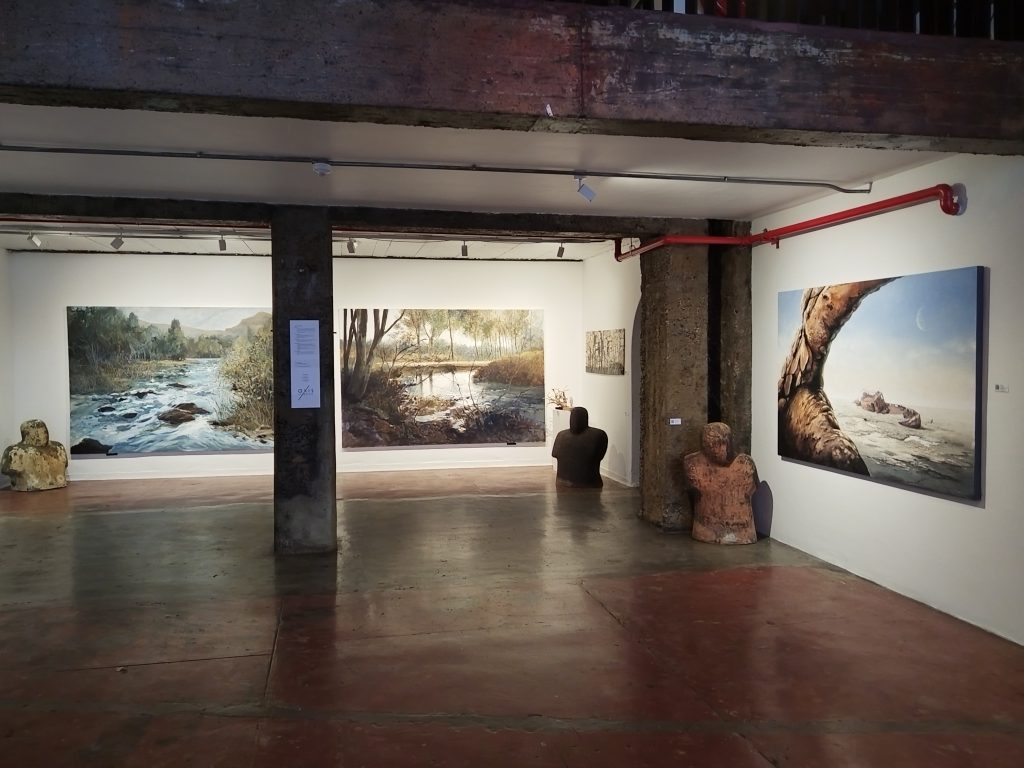
Rather than depicting specific locations, the works construct atmospheric spaces that feel remembered rather than observed. Diffused light, dissolving horizons, and recurring celestial imagery create a sense of temporal ambiguity, drawing viewers into contemplative landscapes that exist somewhere between dream and reality.
At the heart of the exhibition lies a tension between permanence and decay. Industrial and architectural forms—once symbols of movement, control, and progress—appear abandoned and absorbed back into indifferent environments. In contrast, the fragmented busts by Herman van Nazareth introduce an intimate human presence that is at once anonymous and universal, prompting reflection on the nature of identity, individuality, and belonging.
Influenced by existential thought and phenomenology, Desolate Dreamscape engages with questions central to human experience: What remains of the individual when context dissolves? Where does identity reside within landscapes that outlast us? And how do we situate ourselves within environments shaped equally by memory, entropy, and time?
Balancing environmental reflection with existential inquiry, the exhibition resists fixed interpretation. Instead, it invites viewers into a slowed, sensory encounter where absence becomes meaningful and desolation transforms into a space for contemplation, awareness, and introspection.