HERMAN
VAN NAZARETH
ABOUT THE ARTIST
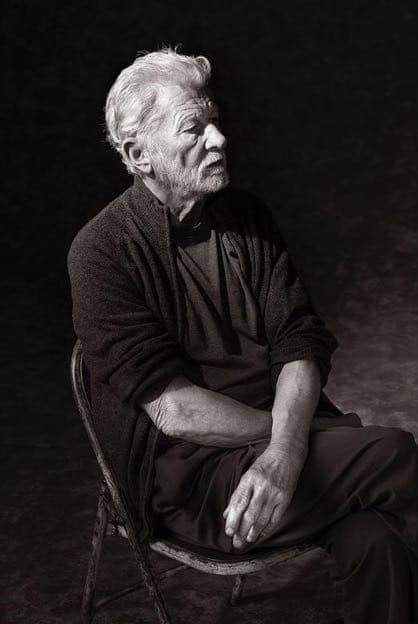
Herman van Nazareth (1936-2026), the pseudonym of Belgian-born artist Herman van Aerde, occupies a distinctive and important position within the history of South African art. Settling in Cape Town in the early 1960s, he developed a deeply humanist practice shaped by his personal experiences of war and his opposition to violence, oppression and the abuse of power.
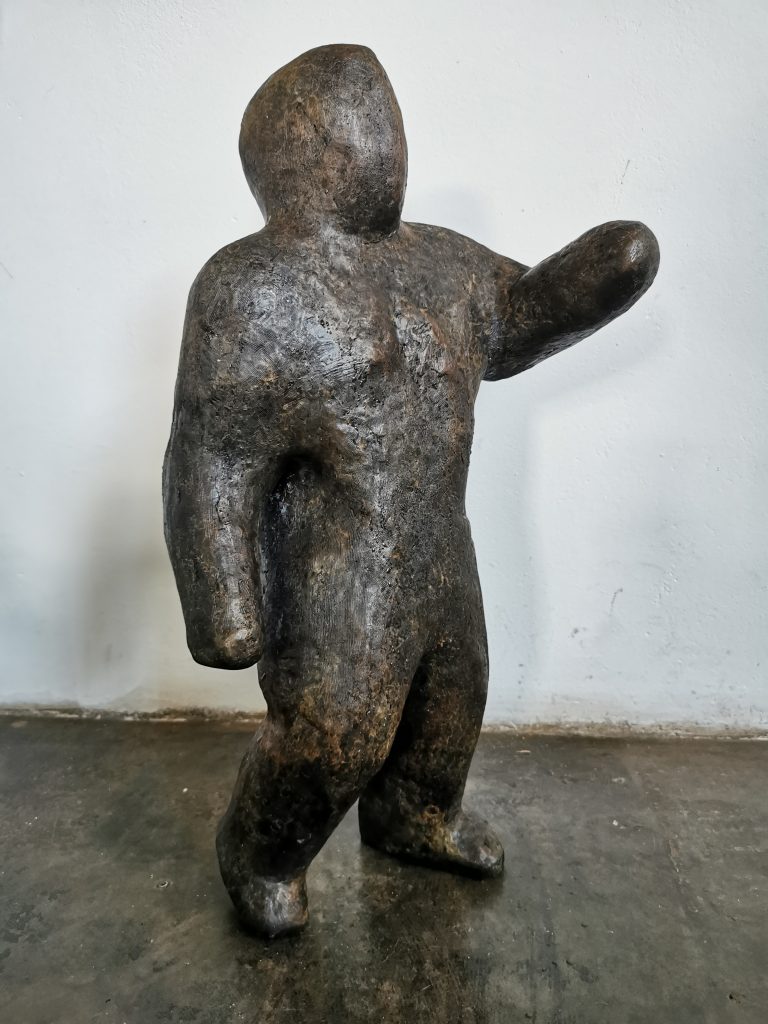
Initially working as a painter, van Nazareth soon began creating sculpture, developing a highly expressive visual language characterised by simplified, almost abstract human forms. Roughly modelled and stripped of individual features, his figures convey vulnerability, anonymity and powerlessness, while simultaneously becoming universal representations of humanity under oppression.
During the apartheid era, van Nazareth’s work served as a powerful form of protest against dictatorship, intolerance and the denial of human dignity. At a time when censorship severely restricted artistic opposition, his sculptures gave physical form to disillusionment and suffering, while also revealing a profound sense of compassion and tenderness.
At the heart of van Nazareth’s practice is the human figure and the search for dignity in a fractured world. His sculptures speak not only of violence and alienation, but also of humanity, vulnerability and the possibility of compassion. His affinity with Expressionism, developed through his training at the Royal Academy in Antwerp under Floris Jespers, is evident in the rawness and emotional intensity of his work.
Van Nazareth’s contribution to South African art lies in his unwavering commitment to the human condition. His work transcends its historical context, transforming protest into a broader meditation on humanity, suffering and resilience.